
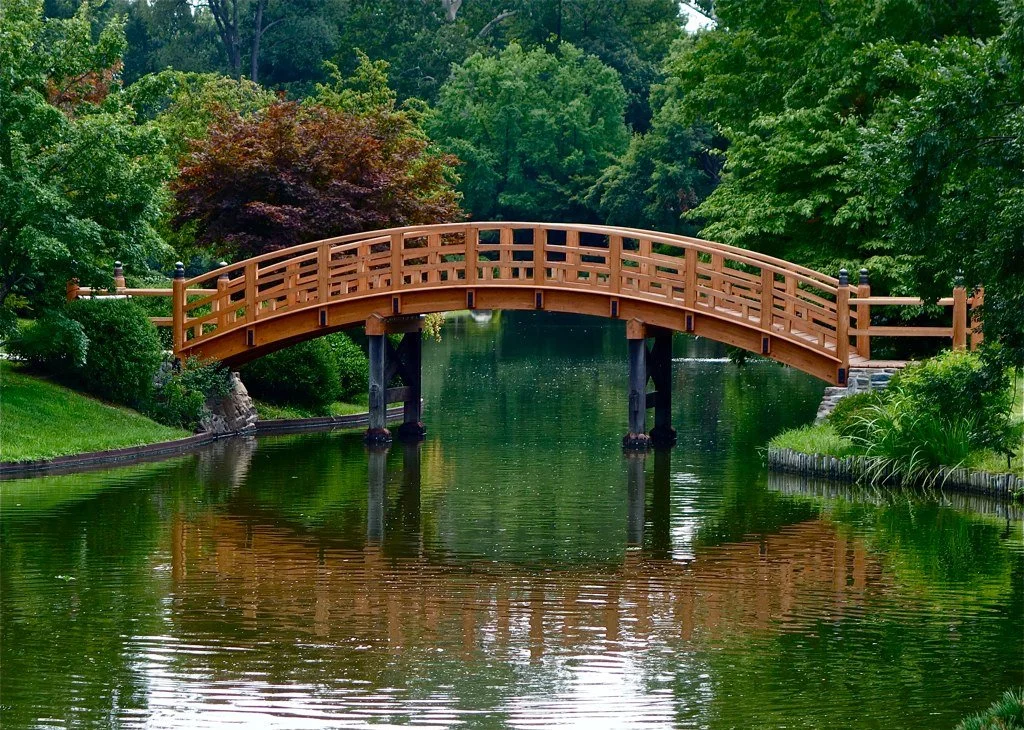
THE JAPANESE GARDEN IN THE WEST: 100 YEARS OF EASTERN INFLUENCE
The serenity, asymmetry and control of a Japanese garden is a seductive contrast to Western symmetry, form and free growth. Even at the time of Japan’s self-imposed isolation, 1639-1854, information reached the West about trees, plants, flowers and designs through illustrations on imported porcelain, lacquer and screens. Once Japan opened up, travellers and plant-hunters were able to bring back information about the gardens, and the plants themselves. Japanese garden styles became highly fashionable into the 20th century, with several still identifiable. Tracing the origins of garden styles, the plants used and the surviving Western examples we can ask; is it possible to create a ‘Japanese’ garden outside Japan, or do we merely give it a Japanese voice?
In association with the Wellington Arts Society
Speaker Amanda Herries read Archaeology & Anthropology at Cambridge University. From 1978-1988 she was Curator at Museum of London specialising in the decorative arts 1714 to present day, exhibitions, lectures, booklets, broadcasts. In 1988-1995 she moved with family to Japan, lecturing and writing on Oriental / Western cross-cultural and artistic influences. In 1995 she returned to the UK, fundraising for arts companies, writing, lecturing and guiding tours to Japan and of gardens and general history in Scotland. Amanda has curated an exhibition on Japanese plants and gardens in London and Edinburgh as part of Japan/British celebrations in 2001 and is currently preparing an exhibition for 2026 on the Scottish Colourist S.J. Peploe. Amanda has contributed to many publications on Japanese plant and garden influences in the West.
Photo credit: Dean Hochman from Overland Park, Kansas, U.S., CC BY 2.0