
Museums, History, and the Stories We Tell
As though it does not have enough on its plate, Te Papa has recently had a lost continent added to its responsibilities. Zealandia, two-thirds the size of Australia, gradually “unzipped” from Gondwana between 85 and 55 million years ago. Aotearoa and New Caledonia are the surviving fragments, but Zealandia’s influence extended even further. It reached Madagascar, whose extinct elephant birds, even larger than our moa, have the kiwi as their closest living relative. The connection echoes into the more recent past, less than a thousand years ago, when Malayo-Polynesian people reached both Madagascar and New Zealand and ate up their big birds.
I would never have known about this but for two visits to museums, one to the Dominion Museum in the early 1960s when, like many of you, I saw the iconic reconstruction of a moa over three metres tall. The other was to the British Museum in the late 1990s, where I stumbled into an exhibition of Malagasy art, whose wood carving struck me as similar to Māori. Such objects somehow carry a force that text does not. We “see it with our own eyes”. There is no denying it as impossible or unbiblical, or sidelining it as unproven. It is “the real thing” and can instantly shatter our preconceptions.
In this talk for the Friends of Te Papa, I share this story, and others about the impact of museums on my thinking as a New Zealand and global historian.
James Belich
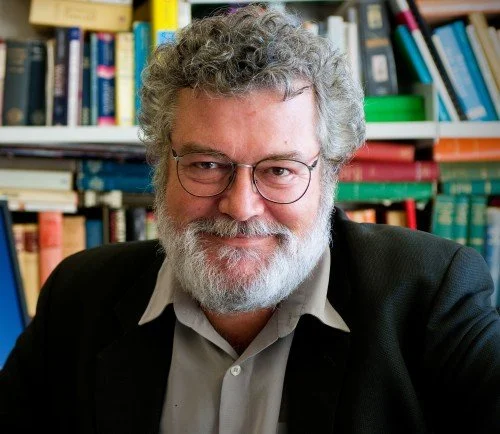
Professor James Belich is a leading New Zealand and global historian whose career spans Oxford University, Victoria University of Wellington, and the University of Auckland. His award‑winning books and documentary work have reshaped how we understand the New Zealand Wars, global settler histories, and the impact of the Black Death. As President of the New Zealand Historical Association and a board member of Te Papa, he brings unparalleled insight into how museums record, interpret, and communicate the past. This talk offers a rare opportunity to hear from one of our most distinguished scholars about Te Papa’s role in telling the stories of Aotearoa.